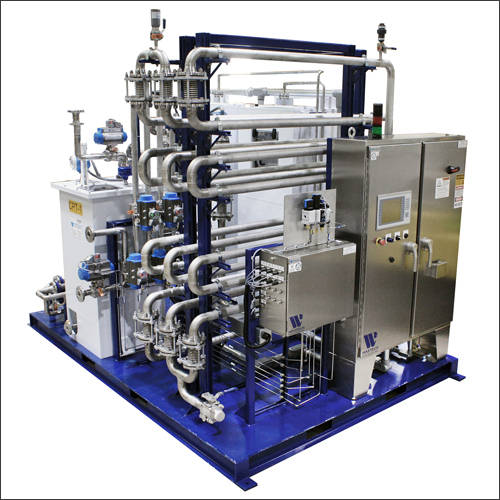

Effluent Sterilisation (Kill Tank) Systems for Biohazard & Fermentation Waste
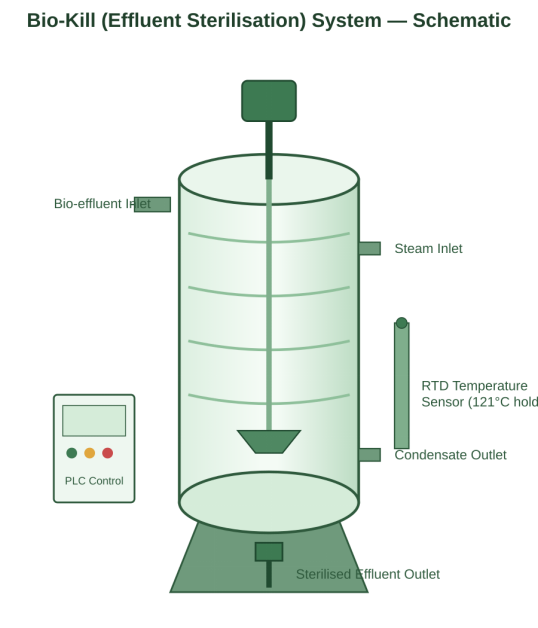
Bio-Kill systems, also called kill tanks or effluent sterilisation vessels, are used to thermally inactivate biologically active waste streams — spent fermentation broth, cell culture effluent, and other biohazardous liquid waste — before they are released for disposal or further treatment. Operating on a validated time-temperature cycle, typically 121°C to 134°C for a defined holding period, these systems ensure that all viable microorganisms are destroyed to a validated sterility assurance level prior to discharge, in line with biosafety and environmental compliance requirements for vaccine, antibiotic, and biologics manufacturing facilities.
-
Key Features
• Batch or continuous kill process with automated fill–heat–hold–cool–discharge cycle
• Direct steam injection or jacketed heating for rapid, uniform temperature rise
• Validated holding time and F0 (lethality) calculation for documented sterility assurance
• PLC-based automatic sequencing with data logging for regulatory/audit traceability
• Dual-vessel (duty/standby) configuration available for continuous plant operation
• Safety interlocks — high-temperature/pressure cut-offs, vent filters, and pressure relief devices
• All contact parts in SS316L for corrosion resistance to biological and cleaning-agent exposure -
Typical Applications
• Sterilisation of fermenter/bioreactor harvest and spent broth before drain disposal
• Biosafety Level (BSL) facility effluent decontamination
• Vaccine, antibiotic, enzyme, and recombinant protein manufacturing waste treatment -
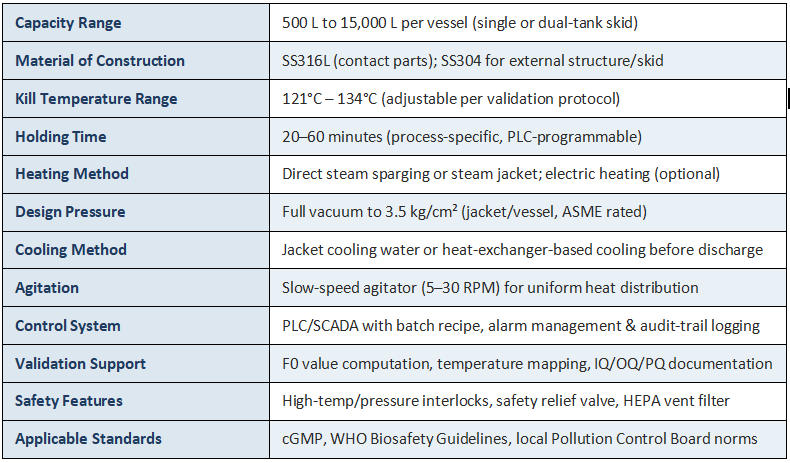
Technical Specifications